For many Indian doctors, dentists, and medical professionals working in or aspiring to work in the U.S., the H‑1B visa has been a key pathway. Whether it’s to complete residencies, join hospitals, establish clinics, or partner with academic institutions, H‑1B sponsorship often serves as the bridge between professional opportunity and growing roots in the U.S.
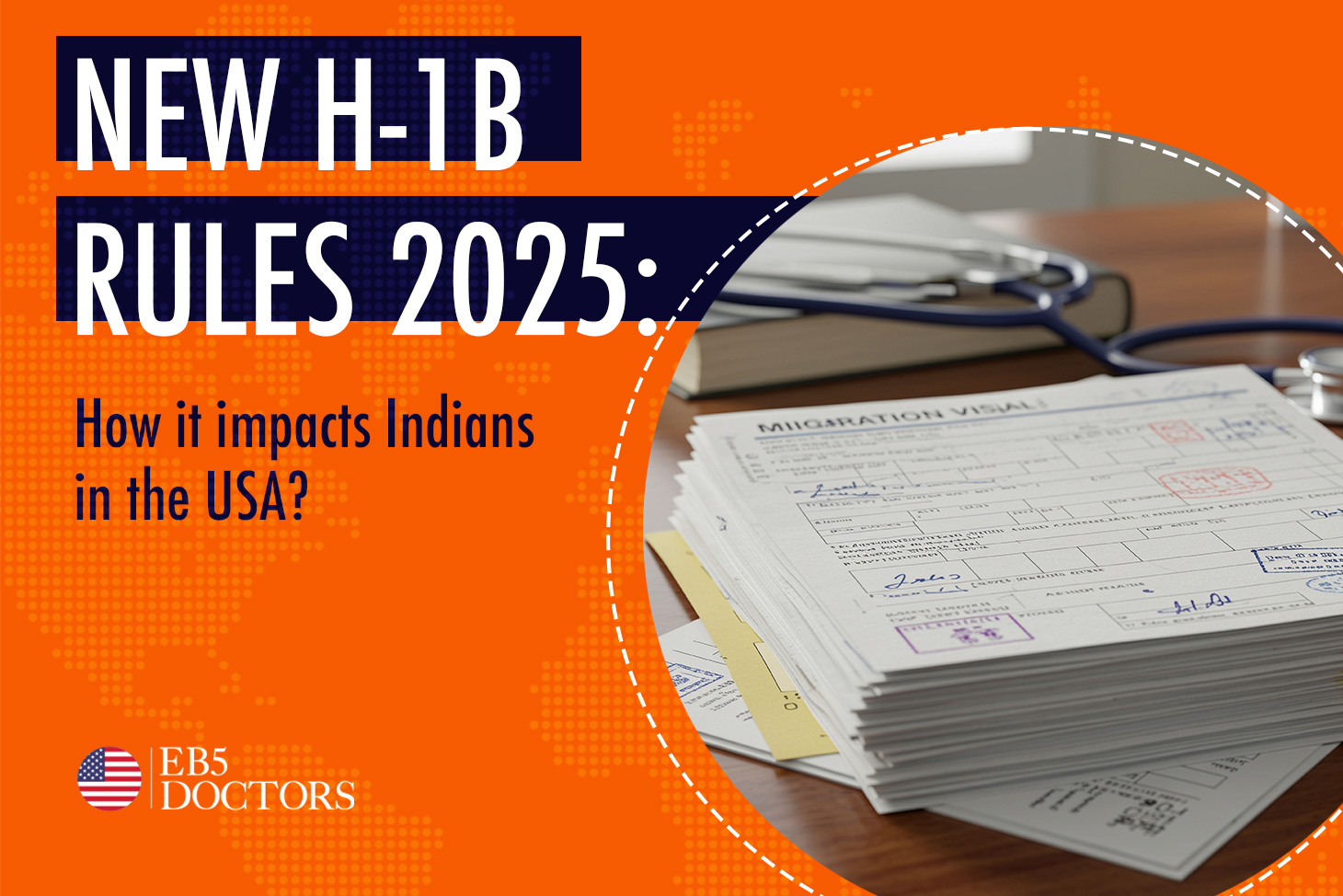
On September 21, 2025, the U.S. government made major changes to the H‑1B visa regime – changes that could affect who qualifies, what they’ll pay, and how to plan for the long term. This post breaks down what’s new, what’s likely to impact you, what remains uncertain, and how to strategize around the shifting landscape.
What did the U.S. government change?
Based on the White House Proclamation “Restriction on Entry of Certain Nonimmigrant Workers” (signed September 19, 2025) and related official clarifications:
- $100,000 One‑Time Fee for New H‑1B Petitions
- All new H‑1B visa petitions filed after 12:01 a.m. Eastern Time on September 21, 2025 must include a one‑time fee of $100,000.
- This fee is in addition to the existing application / filing and processing fees.
- Who is not affected
- Existing H‑1B visa holders who were already issued the visa before the new rule’s effective date are not required to pay the new $100,000 fee upon re‑entry.
- Renewals under a valid H‑1B (if the visa was already in place) are generally not impacted by this new fee.
- National Interest & Exemptions
- The proclamation includes a mechanism for exemptions: the Secretary of Homeland Security (DHS) may waive the fee or exempt certain companies, individuals, or industries if doing so is considered in the national interest of the U.S., or if the standard requirement is deemed to harm U.S. welfare or security.
- Which sectors might qualify? Early indicators suggest critical STEM fields, medical/healthcare services (especially in underserved or research capacities), possibly academic institutions. But these are not yet fully spelled out.
- Rationale Provided
The proclamation argues that the H‑1B program has been “deliberately exploited” to replace (instead of supplement) U.S. workers, suppress wages, especially in STEM professions.
The administration positions the changes as part of a broader push to prioritize U.S. workers, reduce abuse, ensure higher wages, and maintain national economic/strategic interests. - Uncertainties / What’s Not Clear
- Implementation specifics of the exemptions are still being worked out (which types of medical fields, institutions, or geographic areas will qualify).
- How this interacts with existing state licensing, hospital credentialing, or other practical steps in medical practice is not yet defined.
- Whether there will be legal challenges, delays, or modifications as parts of the rule get litigated or clarified via policy/regulation.
- Long‑term consequences for visa caps, lottery rules, wage minimums, or how many available slots will shift.
How these changes particularly impact Indian doctors / medical professionals
India is one of the largest sources of H‑1B applicants, especially in tech—but also increasingly in medicine, dentistry, research, and specialty healthcare roles. Here are how these changes could affect Indian professionals:
- Higher upfront cost for new applicants. A $100,000 one‑time fee adds substantial expense to employers (hospitals, academic institutions, clinics). Indian professionals who rely on hospitals or institutions to sponsor H‑1B must ensure these institutions are prepared for the financial burden.
- Potential shifts in institutional policy. Some hospitals may reduce the number of new H‑1Bs they sponsor, particularly for non‑critical roles or roles that do not clearly qualify as “national interest.” This could lead to more competition, slower processing, or tighter scrutiny of job descriptions, wages, and contracts.
- More value for national interest / underserved roles. Indian professionals working in specialties with unmet needs (rural medicine, underserved communities, public health, research) may be better positioned to benefit from exemptions. Highlighting academic/research credentials, affiliations, or service to underserved populations might help.
- Planning & timing become more critical. Those currently in the U.S. or about to apply will need to accelerate decision‑making, fund allocation, contract negotiations, and legal counsel to ensure their H‑1B petitions are submitted properly and qualify (or apply for exemptions).
- Renewals & spouses less disrupted—so long as you already have valid H‑1B status. For many current holders, the worst‑case scenario may be avoided, since the fee does not apply to existing holders for re‑entry or renewals under valid status. But always check carefully.
Strategy: What should Indian doctors/dentists do now
Given the change and its implications, here are recommended steps for professionals in the medical field (doctors, dentists, researchers, educators) to adapt and plan:
- Early Engagement with Legal Counsel
- Hire an experienced immigration attorney now who understands the new proclamation, can advise whether your case may qualify for national interest exemption.
- Review current contracts, roles, wages, and job descriptions to ensure they align with what may satisfy “critical need” or “national interest.”
- Institutional Readiness
- If you are being sponsored by a hospital or medical institution, verify whether the institution has budgeted for the $100,000 fee.
- Institutions may need to revise H‑1B budgeting, HR policy for foreign hires, or perhaps reduce or reprioritize certain hires.
- Documenting Credentials & Public Interest
- For medical professionals, emphasize research, teaching, service in underserved areas, or other public good roles—as these may strengthen an exemption claim.
- Maintain strong academic / professional credentials, leadership in community health, or affiliations which align with U.S. health policy priorities.
- Explore Alternatives
- EB‑5 Pathway: For those who have access to required investment capital, the EB‑5 visa program remains an important option. It offers a path to permanent residence/green card via investment (and may be less affected by H‑1B fee hikes).
- J‑1, O‑1, or other work visa categories: Explore whether other visa categories may be viable depending on your specialization and career goals.
- Employment‑based green card sponsorship earlier: If your employer has a track record and capacity to sponsor EB2/EB3 or a PERM case, begin those processes early, so you’re less dependent on H‑1B status for long periods.
- Financial Planning
- For new applicants, understand the total cost of sponsorship (visa fees, legal fees, employer fees). The $100,000 fee is large and will likely be borne (often indirectly) by your employer—but cost may trickle down in terms of negotiation, compensation or willingness to sponsor.
- If you are an employer/sponsor (clinic, hospital, or practice), build this cost into your financial model.
- Stay Updated
- Monitor further guidance from DHS, USCIS, and DOJ. The exemption or waiver rules may be clarified, guidance memos may follow.
- Watch for legal challenges; some aspects may be stayed or modified via court rulings.
Possible Long‑Term Effects & Risks
Looking beyond immediate impact, these changes might generate:
- Reduced H‑1B filings from institutions unwilling or unable to absorb large fees – leading to talent bottlenecks in certain medical specialties.
- Changes in U.S. medical education & residency programs: If it’s harder for foreign medical graduates to work in the U.S. on H‑1B, fewer international medical graduates (IMGs) might apply, or programs might adjust their sponsorship policies.
- Talent shifting to remote / alternative markets: Some professionals may choose to work remotely from India or elsewhere, rather than go through expensive or uncertain visa processes. Others may seek countries with more favorable immigration regimes.
- Institutional/legal pushback: Universities, hospitals, industry groups may challenge parts of the rule in courts; we’ll need to track those cases.
Frequently Asked Questions (FAQs)
| Question | Answer |
| Does the $100,000 fee apply if I already have H-1B and I’m renewing? | No — generally renewals and existing valid status are not subject to the new one-time fee. mint+1 |
| If I’m outside the U.S., will re-entry cost $100,000? | No — re-entry of current H-1B holders (valid visas issued before the rule) are not required to pay this fee just for re-entry. mint |
| What kinds of jobs will qualify for “national interest” exemptions? | It isn’t definitively laid out yet. Medical roles in underserved areas, specialists in research, public health, or roles critical to U.S. health infrastructure are plausible. But each case will likely be decided individually. |
| When does this take effect? | Sept 21, 2025 (12:01 a.m. ET) for new petitions. mint+1 |
Conclusion
These changes are among the most consequential in the H‑1B program in decades. For Indian doctors/ dentists/ research professionals, the cost, timing, and strategy for visa sponsorship have all shifted.
But not all is lost. With careful legal guidance, documentation of public interest work, early planning, and exploring alternative pathways, many professionals will still be able to continue—and perhaps even thrive—under the new rules.
If you’re considering applying for an H‑1B, renewing, or planning your career path, it’s essential to map out your options now. Need help figuring out what works best for you? Happy to assist.